How Trading Becomes Simpler Once You Learn Price Action in 2026
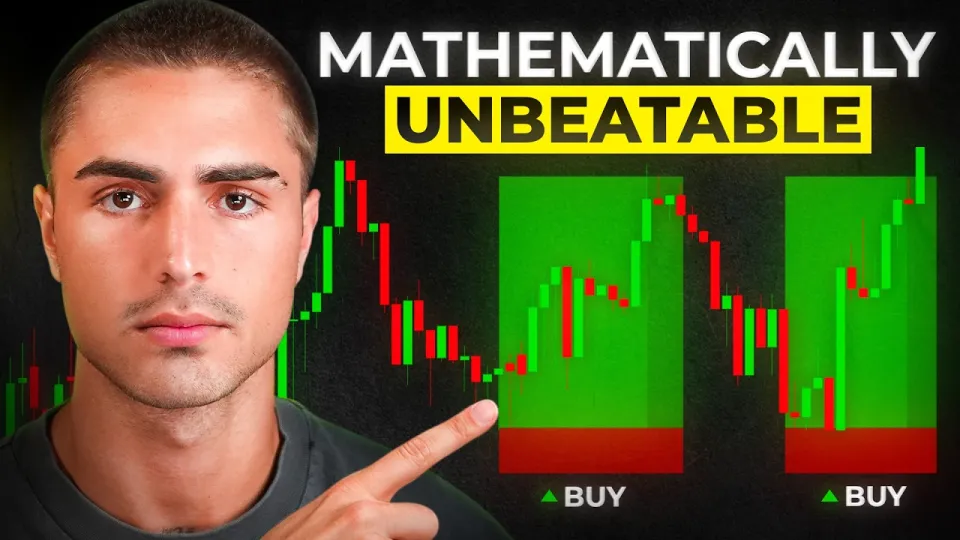
Video: Once You Learn Price Action, Trading Becomes Embarrassingly Simple
Want articles like this for your own video to promote it on YouTube and Google? Order them through the Telegram bot @sat_sit_bot. It writes articles around your video, embeds the video and publishes them on popular niche websites (no ads). Try it free: 50 articles on us.
· based on the channel TJR
Price action trading is the practice of reading a chart from price itself — swing highs and lows, breakouts, retracements and liquidity — instead of relying on a stack of indicators. Once you can identify market structure and wait for a break of structure followed by a retracement, trading decisions get fewer and much clearer. TJR's breakdown of this approach, and the full system behind it at the TJR blueprint, is built on exactly that idea: strip the chart down, then trade what price actually does.
What price action trading actually means
Price action is a method of reading intent from the chart: who is aggressive, where stops sit, and which levels price has already reacted to. A price action trader looks at swing highs, swing lows, equal highs and lows, session highs and lows, and the shape of individual candles. Everything else — moving averages, oscillators, custom indicators — is optional context at best.
The logic is simple. Every candle is the record of a transaction between buyers and sellers. When price breaks a prior swing high, buyers were strong enough to absorb the sellers at that level. When price then pulls back into the area it just left, the market is offering a second chance at a price where the previous move originated.
That is why the chart becomes easier to read with practice: you are no longer interpreting five indicators that disagree with each other. You are answering one question — has structure changed, and where is the nearest area price is likely to return to?
The BOS and retrace sequence in five steps
A break of structure (BOS) plus a retracement is the backbone of most price action models, and it can be written as a repeatable checklist. The sequence below is the one worth drilling on a demo account before risking capital.
- Mark the most recent clear swing high and swing low on your timeframe. Use clean, obvious pivots, not every small wiggle.
- Wait for a candle close beyond that swing — that close is the break of structure. A wick through the level is not a BOS.
- Identify the origin of the impulse move that caused the break. That origin area, often an order block or the last consolidation before the move, is your zone of interest.
- Wait for price to retrace into that zone. This is the patience test: most of the time price does come back, and chasing the breakout candle is what turns a good read into a bad entry.
- Define risk before entry. Stop beyond the swing that invalidates the idea, target the next opposing liquidity pool, and size the position so one loss does not damage the account.
The trap most traders fall into is treating the BOS as an entry signal. It is not. It is confirmation that structure changed. The entry is the retracement, and the retracement is where the risk-to-reward math actually works.
Why the retrace matters more than the breakout
Waiting for the retrace is the single habit that separates a structured price action trader from a breakout chaser. When price breaks a level, stops from the other side of the market are triggered and liquidity is consumed. Very often price returns to that same area to fill orders before continuing in the direction of the break.
That return is not a failure of the setup; it is part of the setup. Entering on the breakout candle means your stop sits far away and your entry is at the worst price of the move. Entering on the retrace means a tighter stop, a better average price, and a clear invalidation point if the idea is wrong.
The practical rule: if price runs away without retracing, you miss the trade. Accept it. There is always another setup, and the trades you skip because they did not meet your criteria are usually the ones that would have cost you money.
Reading liquidity traps around the break
A trap forms when price breaks a level, attracts breakout traders, then reverses back through it. This is the scenario behind one of the most common observations among newer traders: the market seems to do the exact opposite of what the strategy predicts right after entry.
The mechanics are straightforward. Breakout orders and stop losses cluster around obvious highs and lows. A break of structure pushes into that cluster, fills the resting orders, and if there is no genuine follow-through, price returns through the level and takes out the traders who entered late.
Three filters reduce exposure to traps:
- Require a candle close beyond the level, not just a wick.
- Check whether the break happened into a major higher-timeframe level where opposing orders are likely.
- Prefer breaks that come after a clear consolidation, where the move has room to travel.
None of these filters is perfect. They simply shift the odds, which is all any trading method can do.
Why 1-minute scalping breaks beginners
One-minute scalping fails most beginners because it multiplies the two things new traders handle worst: decision frequency and emotional load. A 1-minute chart can print dozens of structure shifts in a session, and each one invites an entry. Four courses and a year of screen time will not fix that if the underlying problem is overtrading.
The pattern is predictable. A trader takes a setup that does not meet criteria, gets stopped out, immediately re-enters to recover the loss, then sizes up. That is tilt, and it is a risk-management failure, not a strategy failure. Price action helps here because it gives you a reason to do nothing: if there is no clean BOS and no retrace into a defined zone, there is no trade.
If you want to scalp, cut the number of instruments you watch, restrict yourself to one or two sessions, and cap your daily losses in advance. The chart is not the hard part; the discipline around it is.
Common questions traders raise about price action
Does price action work without any indicators? Yes. Structure, liquidity and candle behaviour are visible on a bare chart. Indicators can add context, such as higher-timeframe levels or volatility, but they should not be the reason for a trade.
How long before reading charts feels natural? It depends on deliberate repetition, not calendar time. Reviewing a fixed set of charts each day and marking every BOS and retrace builds pattern recognition faster than watching random live sessions.
Do I need a mentor or live guidance? Structured feedback shortens the learning curve, but the core skill is your own ability to mark structure and wait. A mentor is most useful for correcting process errors — position sizing, trade selection, journaling — not for handing over entries.
What if I keep blowing accounts? Stop trading live capital and rebuild on a demo or a small funded evaluation. Track every trade in a journal, and do not return to live size until your losses are contained by rules rather than by hope.
Useful links
- TJR blueprint — the full system for becoming a consistently profitable trader
- Indicators TJR uses daily
- Funded account raffle entry
- Alpha Futures funded accounts — 10% off
- Lucid Trading — 40% off
Final thoughts on simplifying your trading
Price action does not make trading easy, but it makes it legible: structure either broke or it did not, price either retraced into your zone or it did not, and your risk was either defined before entry or it was not. That clarity is what removes the noise of conflicting indicators and the urge to trade every candle. The work is in the repetition — marking BOS and retracements daily until the read becomes automatic. TJR's breakdown is a useful starting point for building that routine, and the TJR blueprint is where the full process is laid out. Trade small, journal everything, and let the retrace come to you.
Key takeaways
- Price action trading reads structure, liquidity and candle behaviour instead of stacking indicators on the chart.
- The core sequence is break of structure (BOS), then a retracement into the area price left behind, not a chase of the breakout candle.
- A break of structure is a signal to watch, not an entry: price often returns to take liquidity before continuing.
- Most beginner losses come from overtrading and tilting on 1-minute charts, not from a missing strategy.
- TJR's breakdown frames patience around BOS and the retrace as the real filter for trade quality.
Source: Once You Learn Price Action, Trading Becomes Embarrassingly Simple · Markdown version
Questions & answers
What is the difference between a break of structure and an entry signal?
A break of structure only confirms that the market shifted direction by closing beyond a prior swing high or low. The entry comes later, when price retraces into the area the impulse move originated from. Treating the break itself as an entry usually means buying the worst price of the move with a stop that is too wide.
Why do breakouts so often reverse right after I enter?
Obvious highs and lows attract breakout orders and stop losses, which is exactly the liquidity the market needs to fill larger positions. If there is no follow-through after the break, price often returns through the level and takes out late entries. Requiring a candle close beyond the level and checking higher-timeframe context reduces, though never eliminates, these traps.
Is 1-minute scalping realistic for a beginner?
It is the hardest environment to start in because it produces many signals per session and punishes hesitation and tilt quickly. Most beginners lose not from a bad strategy but from overtrading and re-entering after losses. A slower timeframe with fewer, higher-quality setups builds the same skills with far less emotional pressure.
Do I need indicators or a mentor to trade price action?
A bare chart is enough to read structure, liquidity and candle behaviour, so indicators are optional context rather than a requirement. A mentor helps mainly with process — trade selection, position sizing, journaling — while the core skill of marking structure and waiting for a retrace has to be built through your own repetition.